
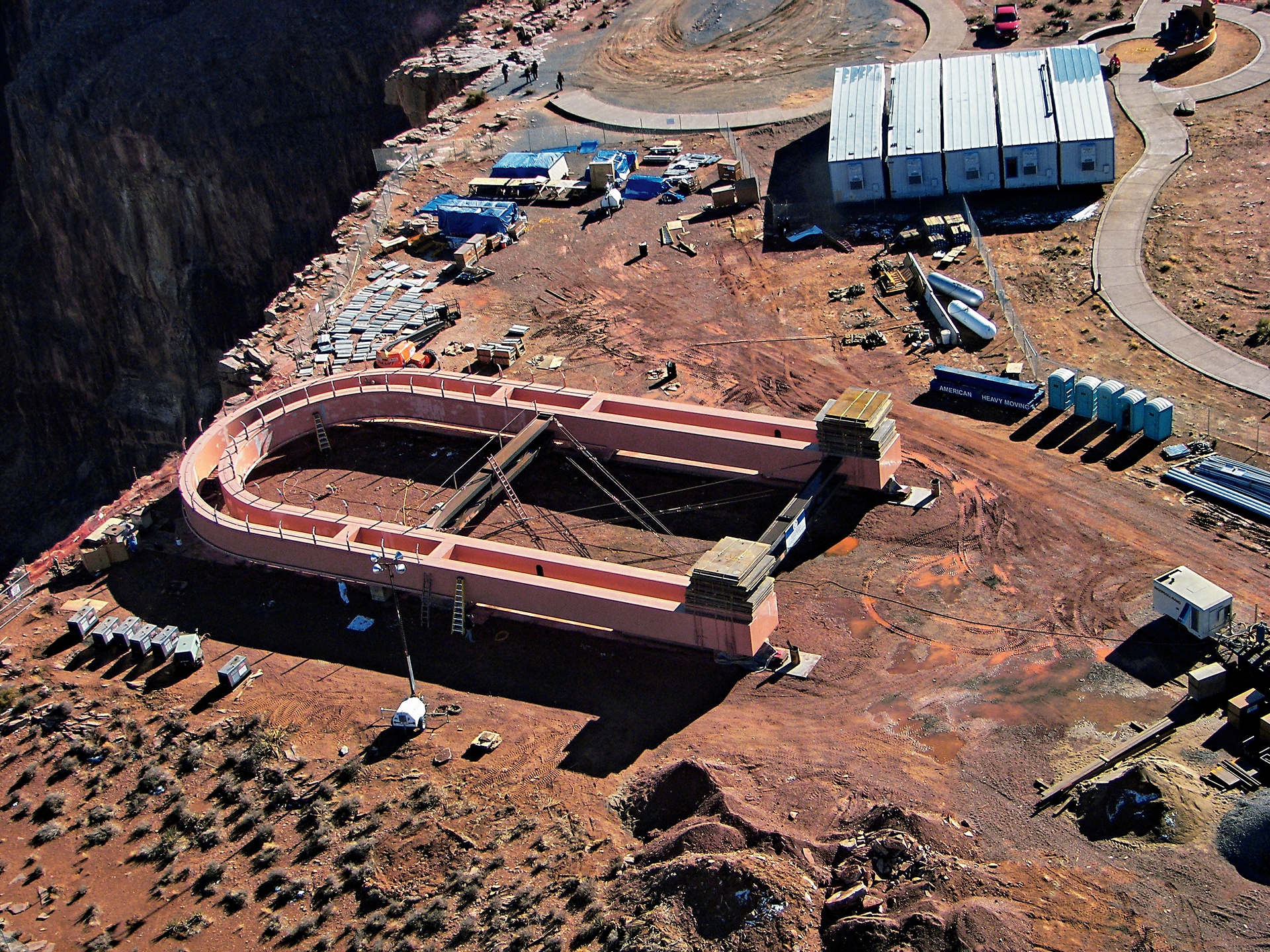

Construction Monitoring
DYWIDAG's monitoring services suit temporary works, that carry high loads, change during construction, and/or, that sit near sensitive assets. Real-time load monitoring, and movement data, lets the temporary works team confirm on site that design assumptions are holding. Monitoring turns a static design check into live assurance, tracking loads, deflections, and ground movement, against agreed trigger levels, set out in a Trigger Action Response Plan (TARP).
What we monitor
Protection of adjacent structures
Construction work often transmits movement into the ground and the structures around it, and the owners of those structures expect evidence that their property has not been harmed. Perimeter buildings, retaining walls, boundary walls and heritage facades can all be exposed, and a potential claim made months after completion is difficult to answer, without a continuous record.
DYWIDAG monitors neighbouring structures before work begins, until after it finishes (& beyond as required). Condition and dilapidation surveys establish the state of each property at the outset. Rotation, vibration, displacement and crack monitoring then run through the works, detecting structural deformation or damage and ensuring the safety and stability of surrounding infrastructure. Tilt sensors, crack gauges, optical displacement sensors, precise levelling and automated total station observations are selected to suit the structure, the access available and the sensitivity agreed with its owner.- Condition and dilapidation surveys before work begins, and a comparison survey on completion.
- Rotation, vibration, displacement and crack monitoring of perimeter buildings, retaining walls and heritage facades.
- A defensible, continuous record against trigger levels, agreed with each affected owner
Related Projects
Ask us about the protection of adjacent structuresSystems we use in this space
Related products
 Learn more
Monitoring Data Management
Integrated with DYWIDAG’s smart products and third-party sensors, our data management platform delivers actionable insights to enhance infrastructure safety, performance, and decision-making.
Learn moreDYWIDAG Smart Guard
Detecting and verifying tilt events in under 5 seconds, in optimal conditions, it combines wireless sensors, integrated cameras, and DYWIDAG's Infrastructure Intelligence to provide instant situational awareness
Live asset protection
Asset owners such as rail and highway authorities often require continuous monitoring when temporary works sit near their infrastructure. They expect proof, in close to real time, that limits are not being exceeded. If movement is detected too late, the asset may have to close, works can stop, and costly delays, or damage claims follow.
DYWIDAG provides monitoring that gives asset owners and contractors the same live picture of how the asset is behaving. A baseline survey records the asset’s condition and position before work starts. Automated systems then track movement, settlement, tilt, vibration and geometry throughout the works. Readings are compared continuously with trigger levels agreed with the asset owner, and alerts go out as soon as a level is reached. Automated total stations, tilt sensors and precise levelling are combined with expert manual inspection. The system is designed around the asset, the access windows available and the owner’s own requirements.
- Baseline condition and position surveys before work starts, with a close-out survey on completion
- Automated, real-time monitoring of live railways, highways, bridges, tunnels and utilities, with instant alerts against agreed trigger level
- Data and reporting through the Infrastructure Intelligence platform that support asset owner approvals and keep works moving
Related Projects
Ask us about live asset protectionSystems we use in this space
Related products
Learn moreDYWIDAG Smart Guard
Detecting and verifying tilt events in under 5 seconds, in optimal conditions, it combines wireless sensors, integrated cameras, and DYWIDAG's Infrastructure Intelligence to provide instant situational awareness
Learn moreMonitoring Data Management
Integrated with DYWIDAG’s smart products and third-party sensors, our data management platform delivers actionable insights to enhance infrastructure safety, performance, and decision-making.
Deep excavations
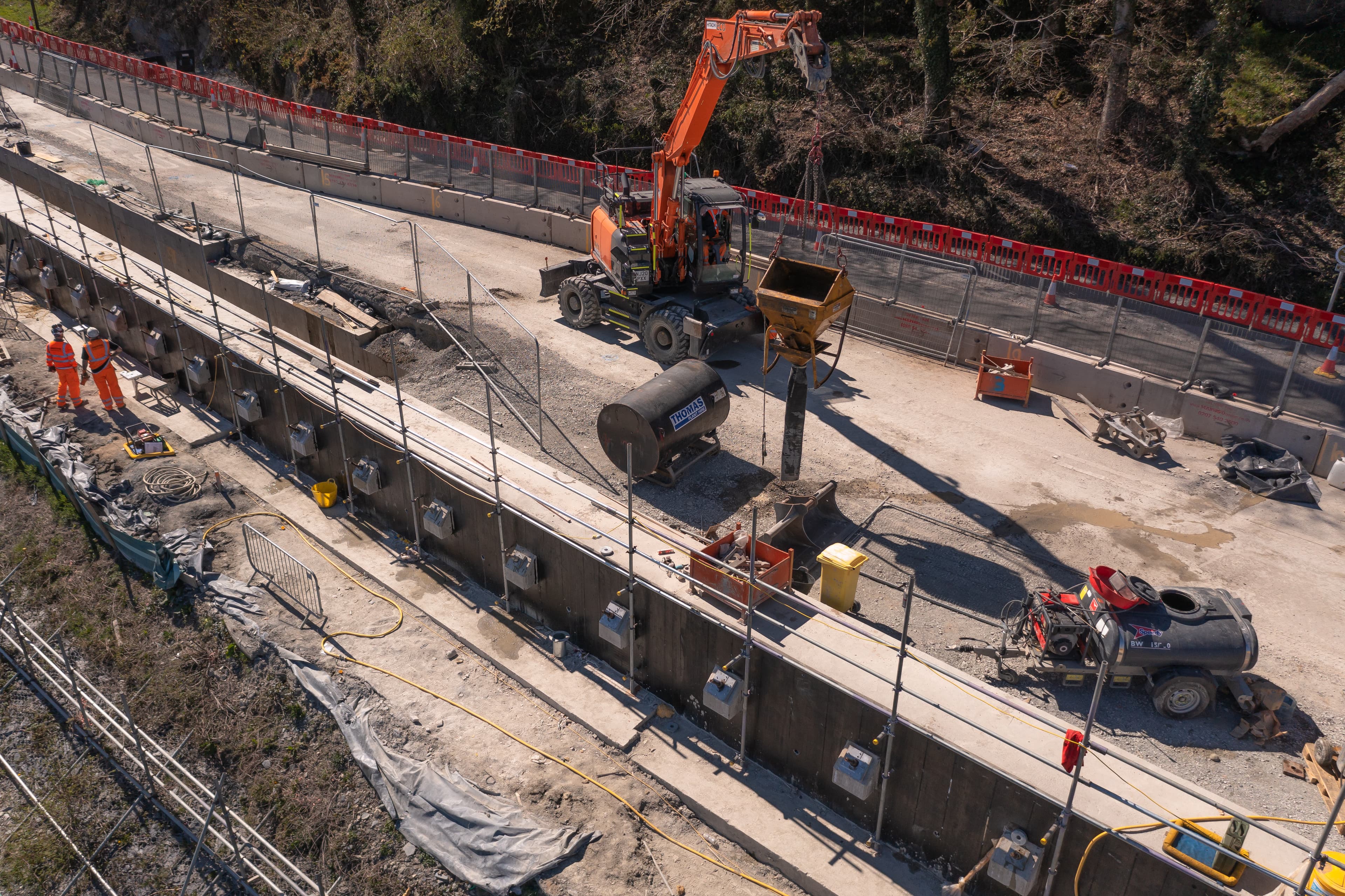
Ask us about deep excavation monitoringDeep excavations for basements, metro stations, shafts and underground car parks rely on temporary retaining walls held in place by ground anchors, struts or props. As each stage of the excavation is dug, the loads on the wall and its supports increase and the surrounding ground starts to move. If that movement goes unchecked, the result can be wall failure, settlement of nearby buildings and roads, or damage to buried services. The design only stays safe if the wall behaves as predicted at every stage.
Readings are checked continuously against trigger levels set by the designer, and alerts go out as soon as a level is reached. The project team can then act before a problem develops. The data also supports the observational method, so designers can use more efficient temporary works and adjust them safely as the work progresses. DYWIDAG often supplies the ground anchors and tie bars well, so one partner is responsible for supplying, installing and monitoring the same support system.- Baseline surveys of the wall and surrounding ground before excavation starts
- Real-time monitoring of anchor and strut loads, wall deflection, ground settlement and groundwater, with instant alerts against design trigger levels
- Data and reporting through the Infrastructure Intelligence platform to support stage-by-stage sign-off and the observational method
Tunnels and underground structures
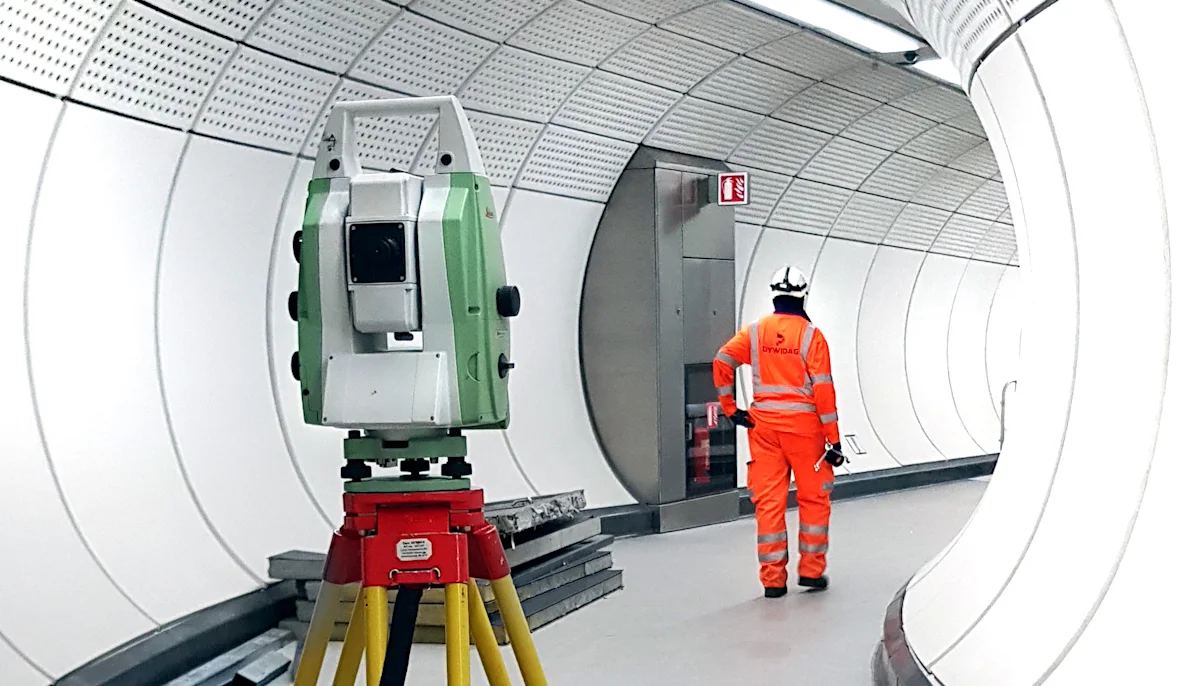
Tunnels, shafts, caverns and cross passages are built through ground that is often hard to predict, and many run under cities, existing railways and buildings. Each metre excavated changes the stress in the ground, which can deform the tunnel lining, overload the rock support and cause settlement at the surface. Movement that isn’t caught early, can damage the tunnel, or the structures above it, stop excavation, or, put workers at risk.
DYWIDAG monitors tunnels and underground structures from the first excavation through to long-term operation. Baseline surveys record the ground surface, nearby buildings and existing underground assets before tunnelling begins. As the excavation advances, we monitor:
- The lining: convergence and deformation, using automated total stations and 3D optical targets.
- The support: stresses and strains in the lining and loads in rock bolts and anchors, using strain gauges, load cells and fibre optics.
- The surface and nearby assets: settlement and tilt of the ground, buildings and existing tunnels along the route.
- Groundwater: water pressure around the excavation. Readings are checked continuously against design trigger levels, and alerts go out as soon as a level is reached. The project team can then adjust excavation rates, support, or face pressure, before a problem develops. The same approach supports the observational method used for example in sprayed concrete lining (SCL) and New Austrian Tunnelling Method (NATM) tunnelling methods. When the tunnel opens, the system can stay in place for long-term structural health monitoring.
- Baseline surveys of the ground surface, buildings and existing underground assets before tunnelling starts
- Real-time monitoring of lining convergence, support loads, surface settlement and groundwater, with instant alerts against design trigger levels
- Data and reporting through the Infrastructure Intelligence platform, from construction through to long-term operation
Ask us about tunnel and underground monitoringRelated Projects
Environmental
Ask us about environmental monitoringConstruction sites in towns and cities almost always work close to occupied sites. Regulators and local authorities set strict limits on noise, dust and vibration, usually through permits, planning conditions and environmental management plans. If those limits are breached, the result can be complaints, fines, restricted working hours or a stop on site. Without reliable data, a contractor has little to show that it has complied.
DYWIDAG provides environmental monitoring, that shows compliance as it happens. Baseline monitoring records the existing noise, dust and vibration levels before work starts, so later readings can be compared fairly. During the works, monitors at the site boundary and at sensitive neighbours measure noise, airborne dust (PM10 and PM2.5) and ground vibration around the clock. Readings are compared continuously with the limits that apply to the project, and alerts go to the site team, as soon as a level is reached. That gives them time to change working methods before a limit is breached. Monitoring is set up to meet the relevant national standards and local requirements wherever the project is, such as DIN 4150 for vibration in Germany or BS 5228 in the UK.- Baseline noise, dust and vibration surveys before work starts
- Continuous, automated monitoring at the site boundary and at sensitive receptors, with instant alerts against permitted limits
- Clear reporting through the Infrastructure Intelligence platform for regulators, neighbours and the project team


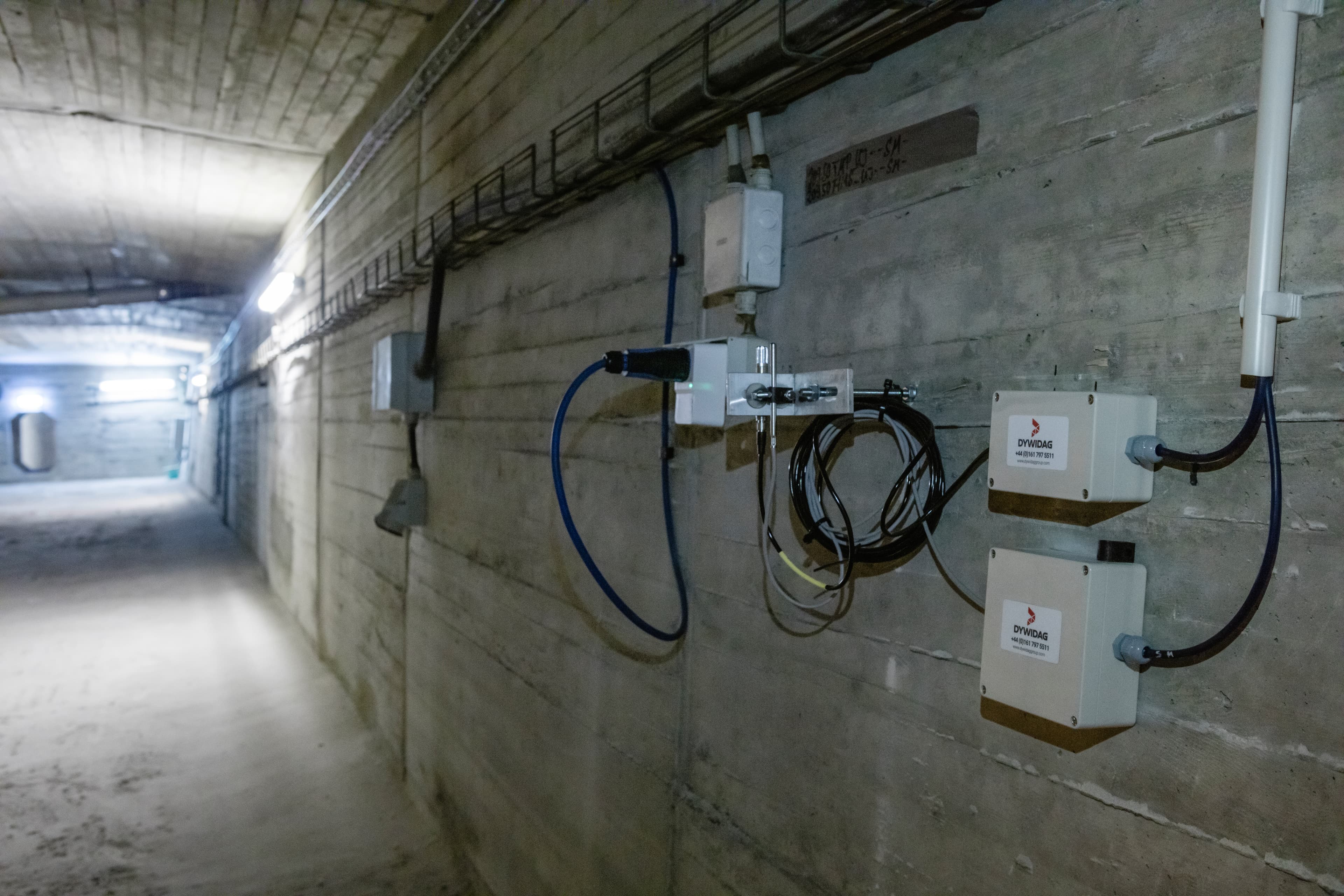
Real-time data, intelligent reporting, escalating alarms, and smart alerts with anomaly detection

3 Related downloads
Structural Health Monitoring (SHM) - Brochure - DYWIDAG UK & Ireland
Manual Monitoring and Survey Services - Brochure - DYWIDAG UK & Ireland
Infrastructure Intelligence - Product Guide - DYWIDAG Global
Why choose DYWIDAG for construction monitoring?
Tailored to your project
Monitoring solutions designed around your structure, site conditions and project requirements.
Earlier insight into risk
Continuous, targeted monitoring helps identify changes and potential issues before they escalate.
Expertise behind the data
Our specialists help turn monitoring data into meaningful insight to support informed decisions.
Support throughout construction
From temporary works and excavations to anchors, basements and facades, monitoring can support critical stages of construction.
Monitoring across every stage of construction
With DYWIDAG, stakeholders gain access to tailored monitoring technologies that enhance safety, efficiency and compliance across all phases of construction operations.
Our solutions also extend to anchor monitoring, facade engineering and basement construction, providing a holistic approach to safeguarding projects and environments in these challenging industries.
FAQ's: Your questions answered
What is temporary works monitoring?
The measurement of loads, movement and ground conditions in temporary structures during construction. It confirms they behave as designed and gives early warning before limits are reached.
Why monitor temporary ground anchors?
Can monitoring support the observational method?
Can DYWIDAG monitor temporary works next to a railway?

