
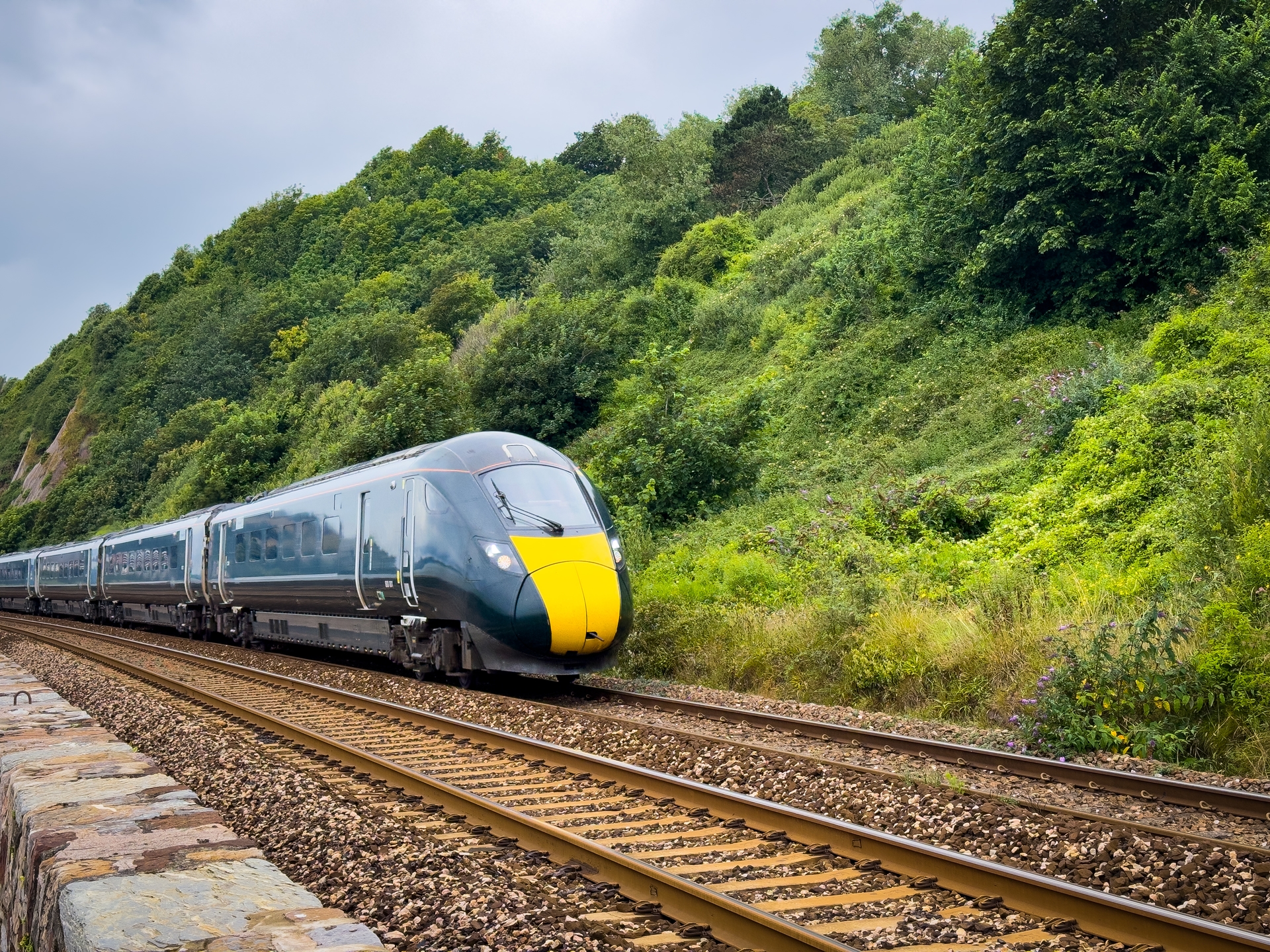

Rail Monitoring
Combining automated solutions, with expert manual inspections, we deliver tailored, end-to-end services, to keep your rail infrastructure safe, operational, and compliant. DYWIDAG’s rail monitoring services provide real-time insights into rail conditions using products such as Smart Temp, Void Monitor, and Smart Guard and more.
What we monitor


Rail temperature monitoring
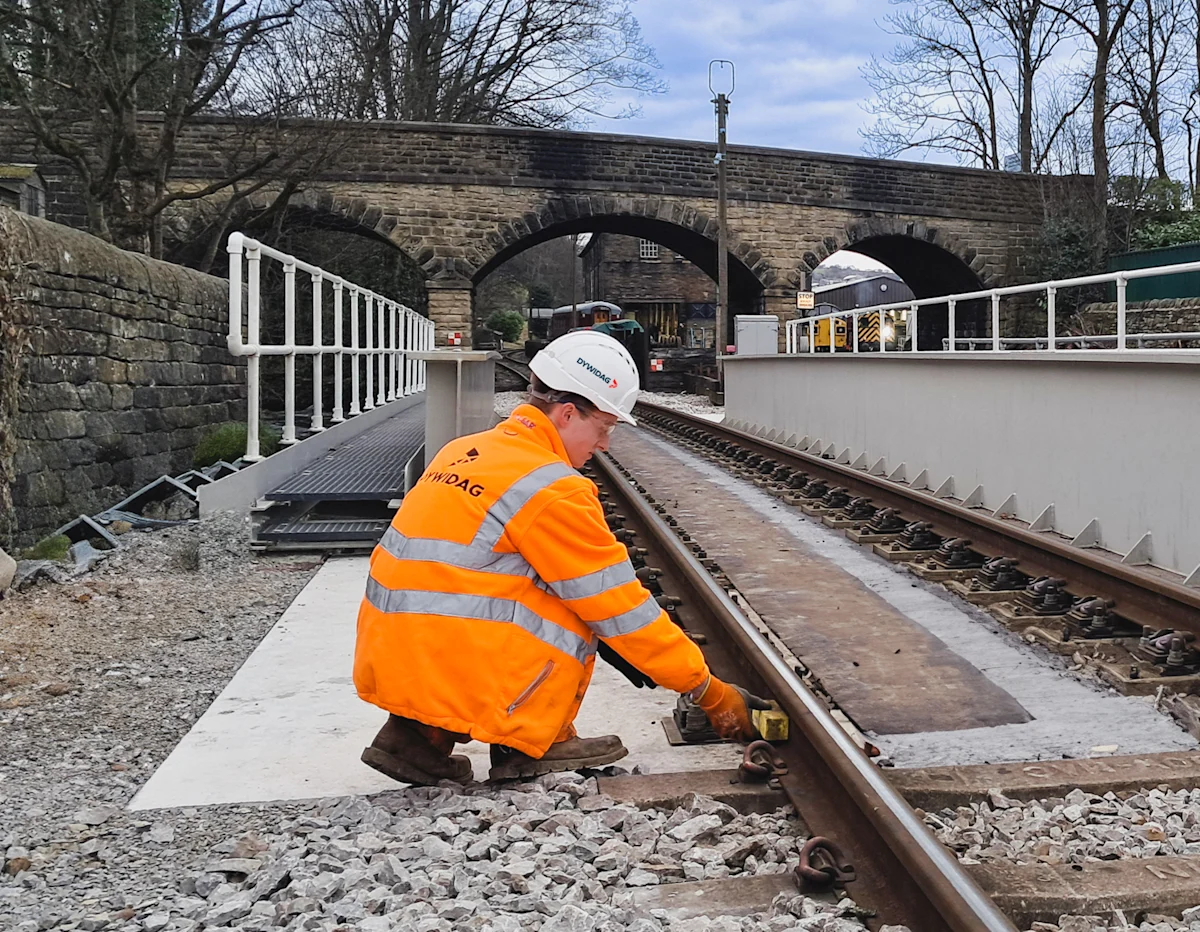
Rail track monitoring matters because track can degrade, or move, without anyone seeing it, and on a railway small faults can quickly become serious ones. Important factors to consider:
- Safety: continuous welded rail can’t expand freely, so stress builds up inside it as it heats. Above its critical rail temperature (CRT) the track can buckle sideways, which can derail a train. Monitoring warns operators before that point is reached.
- Fewer speed restrictions: without measured data, operators often slow trains across whole routes, whenever hot weather is forecast. Readings from specific sites let them restrict speeds only where and when the rail is actually at risk.
- Reliability: a buckled rail can close a line for hours, or days. Early warning lets teams inspect, cool or de-stress the rail before it fails.
- Worker safety: manual readings mean sending staff onto live track, often in extreme heat. Remote sensors send live readings, so staff go out only when they’re needed.
- Targeted maintenance: a record of rail temperatures over time shows which sites heat up fastest, such as cuttings that trap heat or sections in full sun. Maintenance and stress-restoration work can then go where the risk is highest.
- Climate resilience: heatwaves are becoming hotter and more frequent in many regions. Rail networks need accurate, local temperature data to manage a risk that keeps growing.
- Better decisions in real time: live dashboards and alerts let control teams act on what’s happening at the track now, rather than relying on forecasts or the last manual reading.
Related Projects
 Critical Rail Temperature Monitoring on the West Coast MainlineUnited KingdomInfrastrukturRapid vibration monitoring supports ground stabilisation works above a historic railway tunnel.United KingdomTunnelbauKeeping rail running during critical earthworks strengtheningUnited KingdomInfrastrukturInstallation of Monitoring Equipment on a Rail Tunnel PortalUnited KingdomInfrastrukturAsk us about temperature monitoring
Systems we use in this space
Related products
Mehr erfahrenIntelligente Temperatur
Der DYWIDAG Smart Temp CRT - ein Wandel in der Eisenbahnsicherheit.
Mehr erfahrenDYWIDAG Smart Guard
Erkennung und Verifikation von Neigungsereignissen unter optimalen Bedingungen in weniger als fünf Sekunden. Drahtlose Sensorik, integrierte Kameras und DYWIDAG Infrastructure Intelligence ermöglichen eine sofortige situative Bewertung.
Mehr erfahrenTrack Void Monitor
Kontinuierliche und ferngesteuerte Messung von Hohlräumen und Gleisstabilität.
Learn moreMonitoring Data Management
Integrated with DYWIDAG’s smart products and third-party sensors, our data management platform delivers actionable insights to enhance infrastructure safety, performance, and decision-making.
Void monitoring
A void is a gap that opens up between a sleeper and the ballast beneath it. When a train passes, the unsupported sleeper and rail are pushed down into the gap, then spring back up. Every passing train repeats that movement, so a small void soon grows. It wears the ballast, damages sleepers and fastenings, and throws track geometry out of line.
Left unchecked, voids lead to poor ride quality, higher maintenance costs and, in the worst cases, broken rails, emergency speed restrictions or line closures. Voids are hard to spot by eye, because the track can look sound when no train is on it. Manual void meter readings mean sending staff onto live track and capture only a snapshot. Continuous, remote monitoring shows how the track really behaves under traffic, day after day.
Benefits of remote track void monitoring
- Find voids early: small voids are picked up before they damage sleepers, fastenings and affect track geometry.
- Plan maintenance, don't react: tamping and other repairs can be booked into planned possessions instead of emergency call-outs.
- Fewer speed restrictions: fixing voids before they worsen avoids the restrictions that follow track faults.
- Safer working: remote readings replace repeated manual void meter checks on live track.
- Real-world data: measurements under actual train loads show how the track really behaves, not a one-off snapshot.
- Proof that repairs worked: monitoring before and after maintenance confirms whether a void has been fixed.
Related Projects
Atlas Road Track & Bridge MonitoringUnited KingdomBrückenCritical Rail Temperature Monitoring on the West Coast MainlineUnited KingdomInfrastrukturInstallation of Monitoring Equipment on a Rail Tunnel PortalUnited KingdomInfrastrukturRapid vibration monitoring supports ground stabilisation works above a historic railway tunnel.United KingdomTunnelbauTalk to us about void monitoringSystems we use in this space
Related products
Mehr erfahrenIntelligente Temperatur
Der DYWIDAG Smart Temp CRT - ein Wandel in der Eisenbahnsicherheit.
Mehr erfahrenDYWIDAG Smart Guard
Erkennung und Verifikation von Neigungsereignissen unter optimalen Bedingungen in weniger als fünf Sekunden. Drahtlose Sensorik, integrierte Kameras und DYWIDAG Infrastructure Intelligence ermöglichen eine sofortige situative Bewertung.
Learn moreMonitoring Data Management
Integrated with DYWIDAG’s smart products and third-party sensors, our data management platform delivers actionable insights to enhance infrastructure safety, performance, and decision-making.
Mehr erfahrenTrack Void Monitor
Kontinuierliche und ferngesteuerte Messung von Hohlräumen und Gleisstabilität.
Slope and earthworks monitoring
More than products – an end-to-end service
Buying sensors is only part of the answer. DYWIDAG supports you and your project partners, including designers and main contractors, from the first site assessment to long-term operation, with geotechnical and monitoring specialists at every stage.
- Advise: we review your slopes and earthworks, assess the risk and help you decide what to monitor, where, and with which technology. We help set trigger levels and response plans that match your operating rules.
- Design: we design a monitoring system for each site, choosing between automated, manual or combined monitoring depending on the risk, access and budget.
- Install: our own teams install and commission the system on site, including on steep or hard-to-reach slopes using in-house rope access teams. We work within track possessions, road closures and site safety rules.
- Operate and maintain: we look after the sensors, power and communications, so the system keeps working through every season.
- Interpret and respond: our engineers help you understand the data, review alerts and recommend next steps, from closer monitoring to long-term stabilisation using DYWIDAG systems.
One partner, from first conversation to final report, means fewer interfaces, clearer responsibility and faster decisions when it matters.
Most monitoring suppliers can tell you a slope is moving. DYWIDAG can also help you fix it. We supply proven slope stabilisation systems, including DYWI Drill hollow bar soil nails, Threadbars, and high-tensile mesh, with technical support. At Edenbridge Cutting in the UK, 226 DYWI Drill hollow bars and 150 m² of high-tensile mesh were installed within a nine-day rail closure, to stabilise a cutting with a history of landslips.
Monitoring before stabilisation shows where the risk is. Monitoring after shows the fix is working, so you can prove it to regulators, insurers and your own board
Related Projects
Keeping rail running during critical earthworks strengtheningUnited KingdomInfrastrukturRapid vibration monitoring supports ground stabilisation works above a historic railway tunnel.United KingdomTunnelbauChallenging Embankment Stabilization Due to Extreme Weather.United KingdomInfrastrukturAtlas Road Track & Bridge MonitoringUnited KingdomBrückenAsk us about slope and earthworks monitoringSystems we use in this space
Related products
Mehr erfahrenIntelligente Temperatur
Der DYWIDAG Smart Temp CRT - ein Wandel in der Eisenbahnsicherheit.
Mehr erfahrenDYWIDAG Smart Guard
Erkennung und Verifikation von Neigungsereignissen unter optimalen Bedingungen in weniger als fünf Sekunden. Drahtlose Sensorik, integrierte Kameras und DYWIDAG Infrastructure Intelligence ermöglichen eine sofortige situative Bewertung.
Learn moreMonitoring Data Management
Integrated with DYWIDAG’s smart products and third-party sensors, our data management platform delivers actionable insights to enhance infrastructure safety, performance, and decision-making.
Mehr erfahrenTrack Void Monitor
Kontinuierliche und ferngesteuerte Messung von Hohlräumen und Gleisstabilität.
Survey and automated total stations
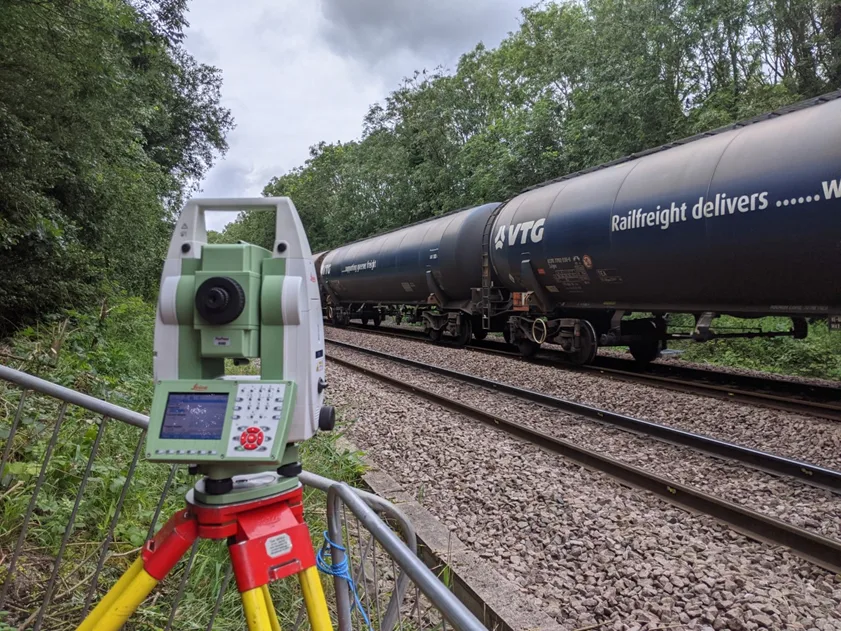
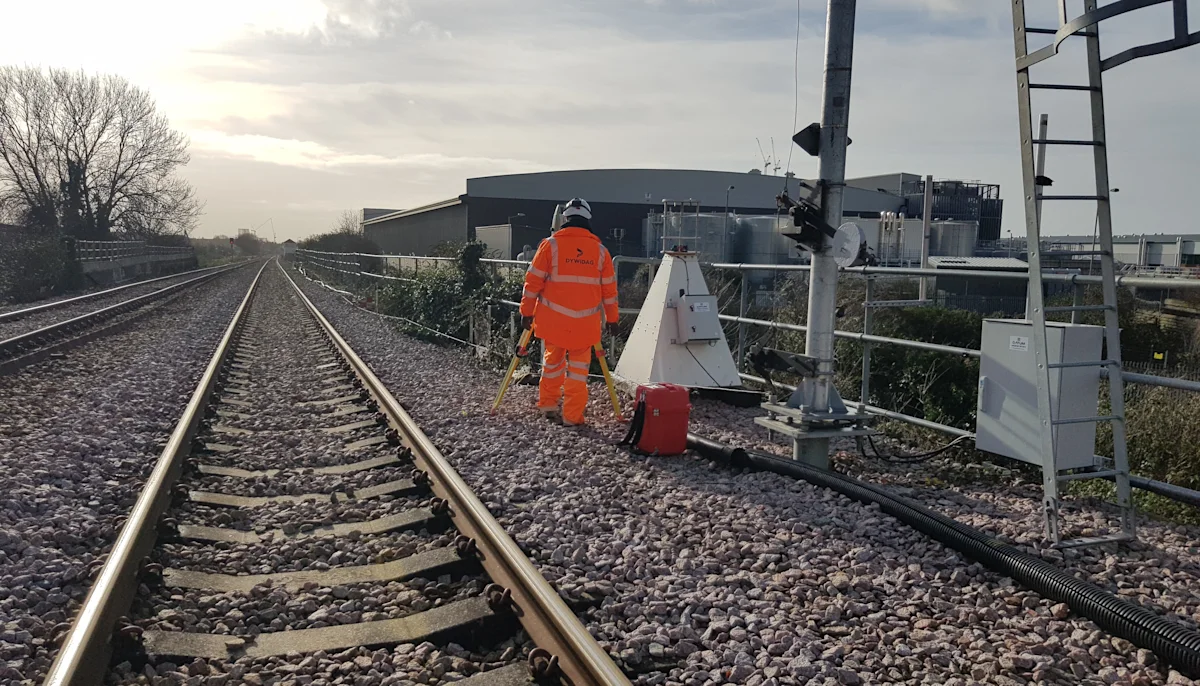
DYWIDAG rail survey services give rail operators, infrastructure managers and contractors accurate, independent information about the position and condition of their track and structures. That supports safe decisions on maintenance, renewals and works next to the line.
Our in-house survey teams carry out 3D track surveys against known benchmarks. These show how track, bridges, tunnels and earthworks are moving, and whether rectification is needed. For UK projects, surveyors hold Personal Track Safety (PTS) certification as a minimum and work to Network Rail standard NR/L2/CIV/177 or equivalent. Teams follow the matching local safety and survey standards on other networks. We work alongside track maintenance and rectification teams, and can issue tailored reports within minutes of the work on site. A survey can stand alone, set a baseline before nearby construction, or be the first step towards continuous automated monitoring on DYWIDAG’s Infrastructure Intelligence platform
Any work undertaken beside, beneath, or on the railway, has to be proven not to have disturbed the track. For piling or excavation next to a live line, embankment strengthening, bridge works or dewatering, the railway normally has to keep its full permissible speed, so track geometry must remain within tolerance at all times, and any deviation be known within minutes by the site team and the asset protection engineer.
For an under-track crossing, the question is whether the drive has settled or heaved the track, and whether the line can be handed back at full speed when the shift ends. DYWIDAG provides remote track geometry monitoring as a complete service for all of these, from baseline survey to handback record.
Automated total stations (ATS), GNSS and laser scanning add absolute movement and a digital baseline, so the handback survey is compared against the same record as the monitoring. In Infrastructure Intelligence, movement at an intervention limit alerts stakeholders within 15 minutes and movement beyond threshold alerts immediately, with live data and daily reports for all parties. Installation and removal are staged with the construction programme.- Automated total stations, GNSS and 3D laser scanning for absolute movement and a digital baseline, so monitoring and handback survey share one record
- Cant and twist plotted continuously, read against the position of the works
- Alerts within 15 minutes of an intervention limit, and immediately beyond threshold
- Live data, trends and daily reports for the contractor, the designer and the asset protection engineer together
- Under-track crossings, adjacent piling and excavation, embankment strengthening and bridge works, through to handback
- Installation and removal staged with the construction programme, within short access periods
Related Projects
Critical Rail Temperature Monitoring on the West Coast MainlineUnited KingdomInfrastrukturInstallation of Monitoring Equipment on a Rail Tunnel PortalUnited KingdomInfrastrukturMonitoring Solution Keeps Britain’s “Last Great Railway Bridge” HealthyUnited KingdomBrückenRapid vibration monitoring supports ground stabilisation works above a historic railway tunnel.United KingdomTunnelbauAsk us about survey and automated total stationsSystems we use in this space
Related products
Mehr erfahrenIntelligente Temperatur
Der DYWIDAG Smart Temp CRT - ein Wandel in der Eisenbahnsicherheit.
Mehr erfahrenDYWIDAG Smart Guard
Erkennung und Verifikation von Neigungsereignissen unter optimalen Bedingungen in weniger als fünf Sekunden. Drahtlose Sensorik, integrierte Kameras und DYWIDAG Infrastructure Intelligence ermöglichen eine sofortige situative Bewertung.
Learn moreMonitoring Data Management
Integrated with DYWIDAG’s smart products and third-party sensors, our data management platform delivers actionable insights to enhance infrastructure safety, performance, and decision-making.
Mehr erfahrenTrack Void Monitor
Kontinuierliche und ferngesteuerte Messung von Hohlräumen und Gleisstabilität.
Track geometry
On the track, we deliver track alignment assessments, precision levelling to <0.5mm, platform gauging and clearance analysis, and overhead line height and stagger.
On structures and earthworks, 3D laser scanning and point cloud surveys record the full geometry of an asset, digital imaging correlation and structured deflection surveys measure how it responds under load, and condition and dilapidation evaluations record its state before and after works. Where readings are required more often than a survey visit allows, automated total stations measure prisms on a programmed schedule with no staff on or near the line, and InSAR satellite data adds millimetre-level ground deformation along whole routes.
- Track alignment assessments, platform gauging and clearance analysis, and overhead line (OHL) height and stagger measurements
- Automated total stations giving survey-grade three-dimensional displacement on a programmed schedule, with no staff on or near the line
- Surveyors, monitoring technicians and rope access teams employed directly by DYWIDAG
- Sub-millimetre precision levelling to <0.5mm, and topographical surveys using GPS and total stations
- High-definition 3D laser scanning and point cloud surveys, with targeted patch scanning
- Digital imaging correlation, structured deflection surveys, and condition and dilapidation evaluations
- InSAR ground deformation along a route, millimetre-level, bi-weekly updates, with historical analysis and processing for vegetated areas
Related Projects
Keeping rail running during critical earthworks strengtheningUnited KingdomInfrastrukturRapid vibration monitoring supports ground stabilisation works above a historic railway tunnel.United KingdomTunnelbauCritical Rail Temperature Monitoring on the West Coast MainlineUnited KingdomInfrastrukturInstallation of Monitoring Equipment on a Rail Tunnel PortalUnited KingdomInfrastrukturAsk us about track geometrySystems we use in this space
Related products
Mehr erfahrenDYWIDAG Smart Guard
Erkennung und Verifikation von Neigungsereignissen unter optimalen Bedingungen in weniger als fünf Sekunden. Drahtlose Sensorik, integrierte Kameras und DYWIDAG Infrastructure Intelligence ermöglichen eine sofortige situative Bewertung.
Mehr erfahrenIntelligente Temperatur
Der DYWIDAG Smart Temp CRT - ein Wandel in der Eisenbahnsicherheit.
Learn moreMonitoring Data Management
Integrated with DYWIDAG’s smart products and third-party sensors, our data management platform delivers actionable insights to enhance infrastructure safety, performance, and decision-making.
Mehr erfahrenTrack Void Monitor
Kontinuierliche und ferngesteuerte Messung von Hohlräumen und Gleisstabilität.
Borehole monitoring
Where an embankment, cutting or retaining structure is moving, or is suspected of it, DYWIDAG installs and reads the borehole instrumentation that establishes the depth, direction and rate of that movement, and proves afterwards whether stabilisation works (DYWDIAG ground anchors, sheet piling, re-profiling and/or drainage, has stopped it.
The same instrumentation characterises the ground before a scheme is designed and shows if, during works, that any excavation, or dewatering, beside the line, is affecting the ground profile.
Inclinometers are the primary instrument, supported by piezometers. Installed through the slope into stable ground, they locate the depth of any failure surface and show the magnitude, direction and rate of movement over time. In-place inclinometers report automatically through data loggers, and are alarmed against agreed thresholds, so acceleration on a developing failure surface is identified as it happens. Manual probe surveys provide the baseline, with independent verification and periodic monitoring. DYWIDAG's own field teams travel the rail network, reading inclinometers and piezometers on a programmed cycle, so a route's whole earthworks portfolio is managed by one team. In Infrastructure Intelligence, boreholes are presented in three dimensions along the earthwork, showing displacement with depth and its development between readings, alongside the surface monitoring for the same slope:- In-place inclinometers reporting automatically through data loggers, alarmed against agreed thresholds, with manual probe surveys for baseline and verification
- DYWIDAG's own field teams reading boreholes with manual inclinometers and piezometers across the network on a programmed cycle
- Three-dimensional borehole views in Infrastructure Intelligence, showing displacement with depth and its development between readings
- Depth of the shear surface, and the magnitude, direction and rate of movement, from cumulative displacement against a fixed toe in stable ground
- Piezometers for pore water pressure. Settlement and extensometer installations for vertical movement
- Ground characterisation before design, and monitoring of excavation and dewatering beside the line during works
- Ground, surface and track geometry monitoring for the same earthwork visible in one project
Related Projects
Critical Rail Temperature Monitoring on the West Coast MainlineUnited KingdomInfrastrukturInstallation of Monitoring Equipment on a Rail Tunnel PortalUnited KingdomInfrastrukturRapid vibration monitoring supports ground stabilisation works above a historic railway tunnel.United KingdomTunnelbauAtlas Road Track & Bridge MonitoringUnited KingdomBrückenAsk us about borehole monitoringSystems we use in this space
Related products
Mehr erfahrenIntelligente Temperatur
Der DYWIDAG Smart Temp CRT - ein Wandel in der Eisenbahnsicherheit.
Mehr erfahrenDYWIDAG Smart Guard
Erkennung und Verifikation von Neigungsereignissen unter optimalen Bedingungen in weniger als fünf Sekunden. Drahtlose Sensorik, integrierte Kameras und DYWIDAG Infrastructure Intelligence ermöglichen eine sofortige situative Bewertung.
Learn moreMonitoring Data Management
Integrated with DYWIDAG’s smart products and third-party sensors, our data management platform delivers actionable insights to enhance infrastructure safety, performance, and decision-making.
Mehr erfahrenTrack Void Monitor
Kontinuierliche und ferngesteuerte Messung von Hohlräumen und Gleisstabilität.
Tunnel and structure monitoring
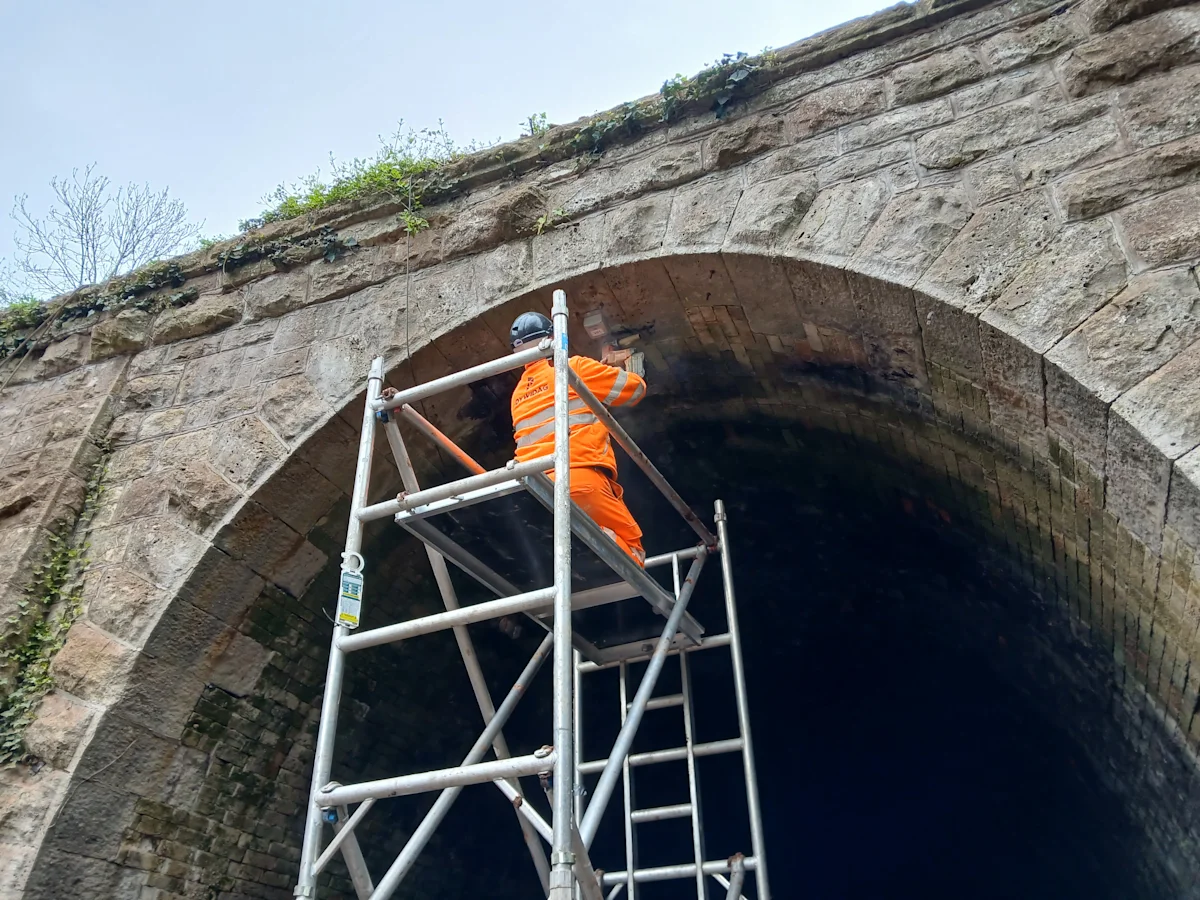
A railway tunnel can be inspected only in a possession, Between possessions any remote works, including piling, excavations, or nearby new tunnel drives, can influence the ground around the tunnel, resulting in changes in load distribution. Structures, including platforms, viaducts and retaining walls are also monitored
DYWIDAG instruments tunnnels, portals and structures, so that the cross-section, profile, and condition of cracks are known during normal operation. Monitoring is undertaken throughout any works that could affect the tunnel/structure and during strengthening or relining.
Convergence arrays, tilt sensors and crackmeters report through data loggers, gateways and repeaters along the tunnel, where mains power and communications are rarely available. Automated total stations track prisms on the lining, laser scanning and point cloud surveys measure the bore profile against the kinematic envelope, and camera-based inspection records the lining between visits. In Infrastructure Intelligence, readings are plotted by chainage with alarms against agreed thresholds, and where a tunnel passes beneath or beside works, lining movement is read against the ground and track geometry monitoring for the site.- Convergence, shape arrays, crackmeters and tilt sensors on the lining and portals, reporting through loggers, gateways and repeaters along the bore
- 3D laser scanning, point cloud surveys and automated total stations, with clearance and gauging analysis against the kinematic envelope
- Lining movement read against the ground and track geometry monitoring for works above or beside the tunnel, with readings plotted by chainage
- Camera-based inspection of the lining between possessions
- Monitoring during strengthening and relining as well as in normal operation
- Coverage along the full bore without mains power or communications at the sensor
- SMS, Email, visual alarms against thresholds delivery by Infrastructure Intelligence
Related Projects
Keeping rail running during critical earthworks strengtheningUnited KingdomInfrastrukturRapid vibration monitoring supports ground stabilisation works above a historic railway tunnel.United KingdomTunnelbauLoad Transfer Quantification on the Cast Iron UnderbridgeUnited KingdomInfrastrukturInstallation of Tilt and Displacement Sensors on a BridgeUnited KingdomBrückenAsk us about tunnelling and structure monitoringSystems we use in this space
Related products
Mehr erfahrenIntelligente Temperatur
Der DYWIDAG Smart Temp CRT - ein Wandel in der Eisenbahnsicherheit.
Mehr erfahrenDYWIDAG Smart Guard
Erkennung und Verifikation von Neigungsereignissen unter optimalen Bedingungen in weniger als fünf Sekunden. Drahtlose Sensorik, integrierte Kameras und DYWIDAG Infrastructure Intelligence ermöglichen eine sofortige situative Bewertung.
Learn moreMonitoring Data Management
Integrated with DYWIDAG’s smart products and third-party sensors, our data management platform delivers actionable insights to enhance infrastructure safety, performance, and decision-making.
Mehr erfahrenTrack Void Monitor
Kontinuierliche und ferngesteuerte Messung von Hohlräumen und Gleisstabilität.


Real-time data, intelligent reporting, escalating alarms, and smart alerts with anomaly detection

9 Related downloads
Structural Health Monitoring (SHM) - Brochure - DYWIDAG UK & Ireland
Manual Monitoring and Survey Services - Brochure - DYWIDAG UK & Ireland
Smart Temp - Installation Guide - DYWIDAG UK & Ireland
Infrastructure Intelligence
Why choose DYWIDAG?
Lifecycle monitoring
We deliver tailored monitoring solutions for every stage of your rail infrastructure lifecycle, providing the data you need to make informed decisions.
In-house rope access
Our rope access teams make hard-to-reach areas accessible—saving you time, lowering costs, and ensuring faster project solutions.
Integrated data platform
Our Infrastructure Intelligence platform centralizes and streamlines your rail monitoring data, delivering clear, actionable insights supporting proactive risk management.
A legacy of expertise
With 160 years of industry-leading knowledge, we deliver reliable, high quality, solutions tailored to your project needs - giving you confidence every step of the way.
Want to know how our rail monitoring services can support your next project?

Your partner for reliable monitoring
DYWIDAG is at the forefront of technical innovation in rail monitoring systems, offering an integrated approach to railway infrastructure maintenance and Structural Health Monitoring. Benefiting from our manufacturing and installation expertise, we provide solutions and services fitting the unique demands of rail infrastructure.
Our systems provide stakeholders with the right tools for rail monitoring, improving operational safety, efficiency, and longevity.
Committed to service excellence
Committed to service excellence
By collaborating with specialized contractors when needed, we bring the best expertise to your project. Our dedication to research and development drives continuous improvement, enhancing the reliability of our rail monitoring solutions while reducing manual intervention. Together, these strengths make DYWIDAG the trusted partner for maintaining safe, efficient, and compliant railway infrastructure. Explore examples of licenses and approvals below:
- Network Rail PCL licence
- CSCS & SSSTS qualified
- Network Rail compliant: NR/L2/CIV/177
- Safety Trained: PTS/COSS/SWL
Rope access services
Rope access is a fast, safe, and cost-effective method for installing and maintaining your rail Structural Health Monitoring systems. DYWIDAG’s certified technicians combine expertise in sensor installation, inspection, maintenance and rope access to minimize disruption and eliminate the need for costly equipment like scaffolding. Ideal for large, or hard-to-access structures, this approach allows quick movement between sites, even outside operating hours. With additional skills in confined space entry, our team ensures safe installation in nearly any location, offering an efficient, flexible, and low-impact alternative to traditional methods.


Real-time data solutions
DYWIDAG’s Infrastructure Intelligence (II) platform is a cloud-based solution that transforms how you manage sensor data. By tracking key metrics like temperature, weather, and environmental changes in real-time, II enables early risk detection and proactive action to prevent disruptions.
With multi-layered user profiles, remote access, and an intuitive dashboard, II ensures efficient project oversight. Digital twins, IoT, AI, and anomaly detection provide real-time insights, while smart alerts and automated notifications keep you informed.
Stay ahead, and optimize operations with Infrastructure Intelligence.

FAQ's: Your questions answered
Where should rail temperature sensors be installed?
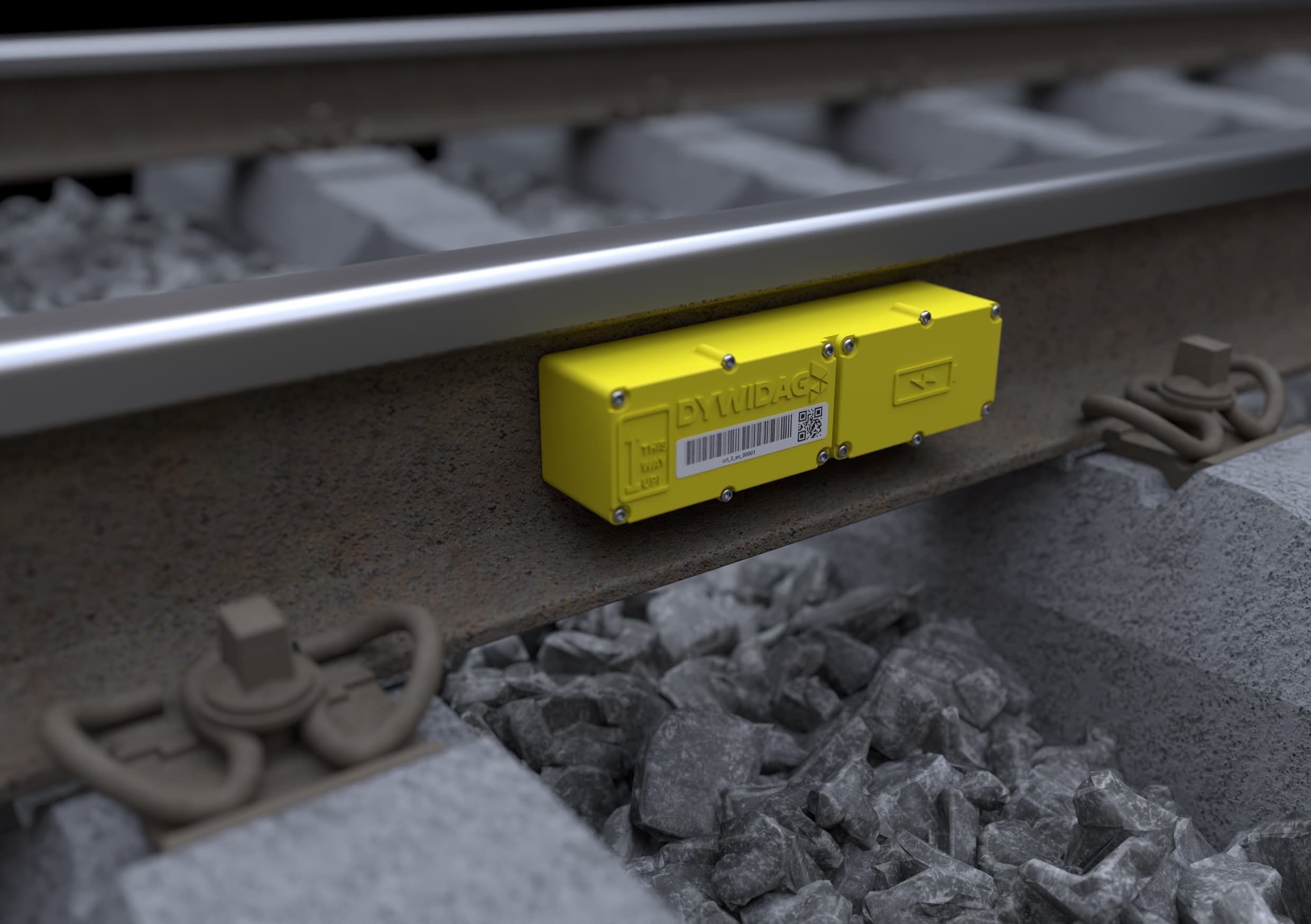
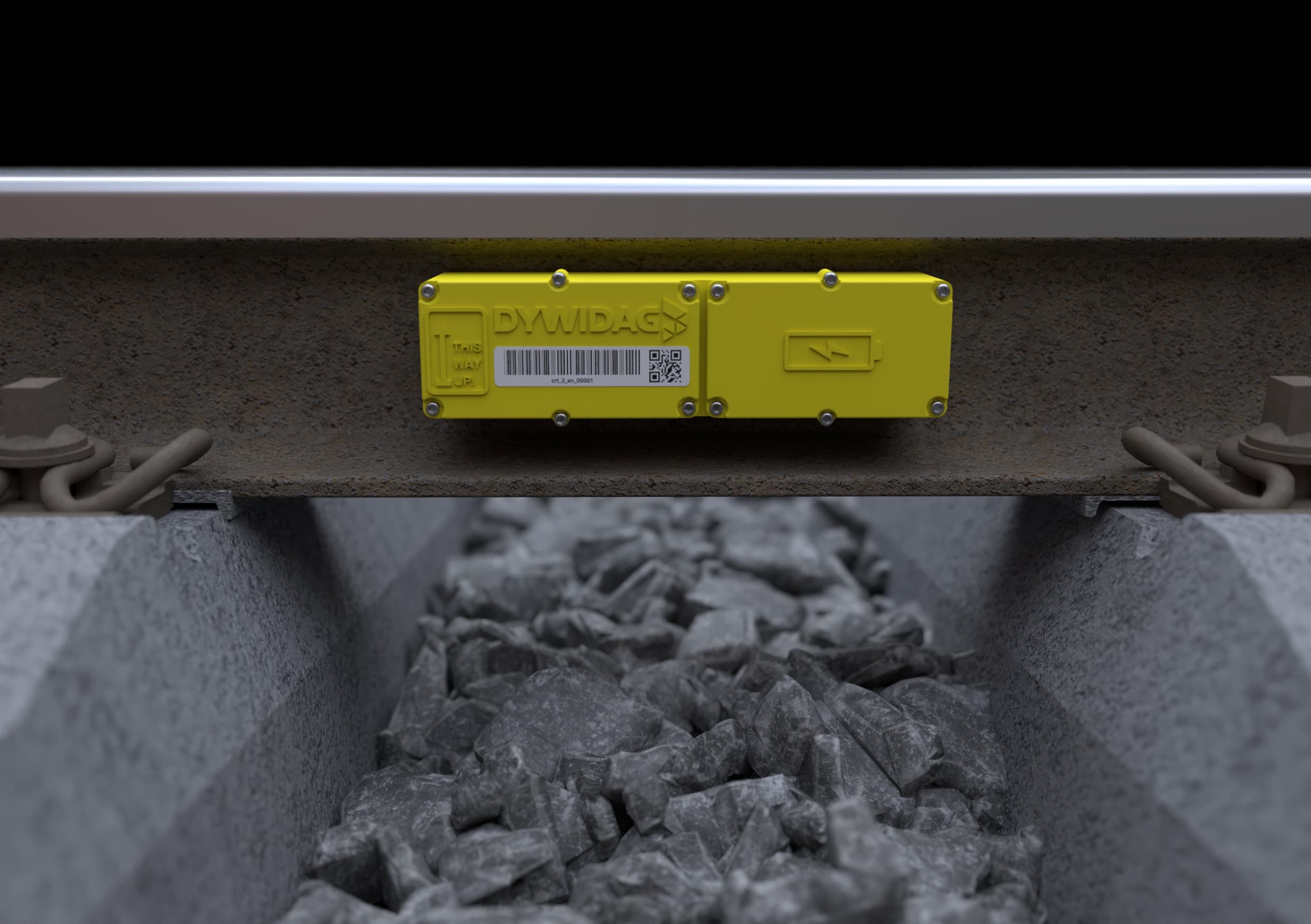
Learn about Smart TempSensors work best at locations most likely to overheat or buckle. These include sites in full sun, cuttings that trap heat, recently disturbed or maintained track, and sites with a history of heat-related problems. Because DYWIDAG Smart Temp attaches with magnets, sensors can be moved quickly to wherever the risk is highest as the weather changes.
Who receives rail temperature alerts?
How is track voiding measured?
What is slope monitoring?
What happens after a slope movement alert?
What is a rail track survey?

